
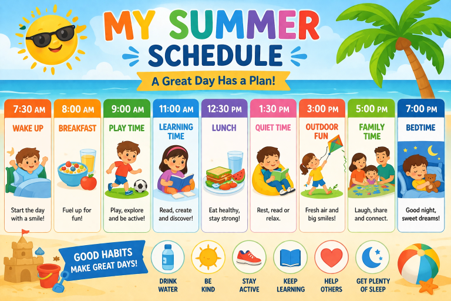
Summer is often one of the most exciting times of the year for children. School is out, the weather is warm, and there are endless opportunities for play, exploration, and family fun. While summer should certainly be a time for relaxation and enjoyment, children still benefit from having some structure in their daily routines.
Without any routine, children can sometimes experience boredom, irregular sleep schedules, excessive screen time, and difficulty transitioning back to school in the fall. On the other hand, an overly packed schedule can leave children feeling overwhelmed and exhausted. The key is finding a healthy balance between freedom and structure.
By creating a summer schedule that combines learning, play, rest, and family time, parents can help children enjoy a fun-filled summer while continuing to grow and thrive.
Why Structure Is Still Important During Summer
Children thrive when they know what to expect. Routines provide a sense of security and help children develop self-regulation skills, independence, and responsibility.
Benefits of maintaining some structure during summer include:
- Better sleep habits
- Reduced boredom and behavioral challenges
- Improved emotional regulation
- Consistent opportunities for learning
- Healthier screen time habits
- Easier transition back to school
- Increased confidence and independence
Structure does not mean every minute needs to be planned. Instead, it provides a predictable framework that allows plenty of room for flexibility and fun.
Start with Consistent Wake-Up and Bedtimes
One of the biggest challenges during summer is maintaining healthy sleep habits.
While it’s okay for children to stay up slightly later or sleep in occasionally, drastic schedule changes can make the transition back to school difficult.
Consider:
- Maintaining a consistent bedtime
- Keeping wake-up times within one hour of the school-year schedule
- Creating calming bedtime routines
- Limiting screens before bedtime
- Encouraging quiet activities in the evening
Well-rested children are generally happier, more focused, and better able to enjoy summer activities.
Create a Flexible Daily Framework
Instead of planning every hour of the day, establish general blocks of time for different activities.
Morning
- Wake up and get dressed
- Eat breakfast
- Outdoor play or exercise
- Reading time
Midday
- Lunch
- Creative activities
- Educational games
- Quiet time
Afternoon
- Swimming or outdoor activities
- Playdates
- Summer camps or programs
- Family outings
Evening
- Dinner
- Family time
- Bath and bedtime routine
This approach creates structure while still allowing flexibility.
Schedule Outdoor Time Every Day
Summer offers the perfect opportunity for children to spend more time outside.
Outdoor play supports:
- Physical development
- Gross motor skills
- Creativity
- Social skills
- Mental well-being
Ideas include:
- Nature walks
- Bike rides
- Water play
- Playground visits
- Backyard games
- Gardening projects
Try scheduling outdoor activities for cooler times of day, such as mornings or evenings.
Include Learning Opportunities
Summer doesn’t have to mean learning stops.
Incorporating educational activities helps prevent the “summer slide,” where children may lose some academic skills over the break.
Fun learning opportunities include:
- Reading challenges
- Library visits
- Educational board games
- Science experiments
- Cooking activities
- Nature exploration
- Journaling
- STEM projects
The goal is to keep learning enjoyable and pressure-free.
Make Time for Free Play
Children need unstructured time to explore their interests and use their imaginations.
Free play allows children to:
- Develop creativity
- Practice problem-solving
- Build independence
- Explore new ideas
- Strengthen social skills
Examples include:
- Building with blocks
- Pretend play
- Drawing and crafting
- Creating obstacle courses
- Playing with toys independently
Not every moment needs to be filled with organized activities.
Manage Screen Time Thoughtfully
Screens can be a useful tool during summer, but balance is important.
Consider creating family guidelines such as:
- Completing chores before screen time
- Limiting recreational screen use
- Encouraging outdoor play first
- Scheduling technology-free family time
Alternative activities might include:
- Reading
- Puzzles
- Crafts
- Outdoor games
- Family walks
A balanced approach helps prevent screens from becoming the primary source of entertainment.
Build Responsibility Through Daily Tasks
Summer is a great time to teach responsibility and life skills.
Preschoolers
- Putting away toys
- Feeding pets
- Matching socks
- Wiping tables
School-Age Children
- Making beds
- Helping with laundry
- Preparing snacks
- Watering plants
Older Children
- Assisting with meal preparation
- Organizing rooms
- Caring for younger siblings
- Managing personal schedules
Simple responsibilities help children develop independence and confidence.
Plan Weekly Family Activities
Children often remember shared experiences more than expensive vacations.
Consider scheduling weekly family activities such as:
- Family movie nights
- Park visits
- Ice cream outings
- Picnic lunches
- Nature hikes
- Museum visits
- Board game nights
These traditions help strengthen family connections and create lasting memories.
Allow for Downtime
Summer shouldn’t feel like a race from one activity to another.
Children need opportunities to:
- Relax
- Recharge
- Read quietly
- Listen to music
- Enjoy independent play
Downtime supports emotional well-being and prevents burnout.
Use Visual Schedules for Younger Children
Visual schedules can help younger children understand expectations.
Consider creating charts with pictures that represent:
- Breakfast
- Outdoor play
- Reading
- Lunch
- Rest time
- Activities
- Bedtime
Visual reminders help children feel more secure and encourage independence.
Be Flexible When Needed
One of the greatest benefits of summer is the ability to slow down and enjoy spontaneous experiences.
Some days may include:
- Last-minute trips to the park
- Visits with friends
- Family outings
- Rainy-day indoor fun
Schedules should serve your family—not create stress.
Flexibility allows children to enjoy the freedom that makes summer special while still benefiting from predictable routines.
Watch for Signs of Overscheduling
Too many activities can leave children feeling overwhelmed.
Signs may include:
- Irritability
- Fatigue
- Difficulty focusing
- Increased emotional outbursts
- Resistance to activities
If these signs appear, consider scaling back and adding more downtime.
Preparing for the Return to School
As summer comes to an end, begin gradually reintroducing school-year routines.
A few weeks before school starts:
- Adjust bedtimes
- Reestablish morning routines
- Increase reading time
- Discuss upcoming changes positively
This helps children transition smoothly into the new school year.
A successful summer schedule balances structure with flexibility, learning with fun, and activity with rest. Children benefit from predictable routines while still having plenty of opportunities to explore, play, and enjoy the freedom of summer.
By creating a thoughtful summer routine that meets your child’s needs, you can help them build confidence, maintain healthy habits, continue learning, and create lasting memories throughout the season.
At Southwest Academies, we believe that summer is a wonderful opportunity for children to grow through exploration, creativity, friendship, and fun. With the right balance of structure and freedom, summer can be both enjoyable and enriching for the whole family.
Give your child a summer of structured fun; contact Southwest Academies.
Find a Location Near You:
Forest Park Academy