
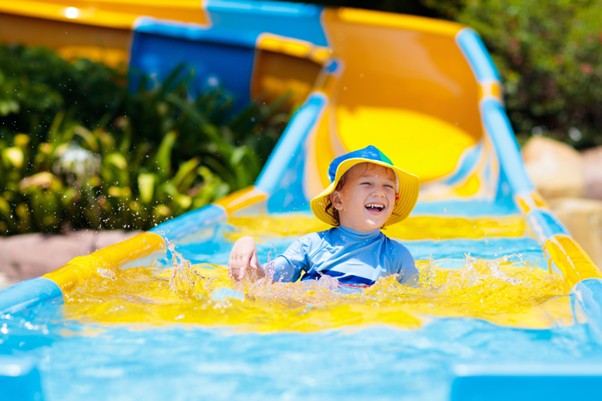
When the temperatures rise, there’s nothing children love more than splashing, pouring, and playing in water. Water play is not only a great way to cool off during hot summer days—it is also an incredible opportunity for learning, creativity, and development.
With the right balance of fun and safety, water activities can provide hours of entertainment while helping children build important physical, social, and cognitive skills.
Why Water Play Is Beneficial for Children
Water play may look like simple fun, but it offers a wide range of developmental benefits:
- Physical Development: Pouring, splashing, and running through water help strengthen coordination, balance, and motor skills
- Sensory Exploration: Water stimulates the senses and supports early learning through touch and movement
- Social Skills: Group water activities encourage sharing, cooperation, and teamwork
- Creativity and Imagination: Children can create games, experiment, and explore freely
Water play is a simple yet powerful way to combine fun with learning.
Essential Water Safety Tips
Before diving into the fun, safety should always come first. Keep these important guidelines in mind:
- Always supervise children around water, even for a moment
- Use age-appropriate equipment and water setups
- Set clear rules about safe play and slippery surfaces
- Encourage regular hydration breaks
- Apply and reapply sunscreen throughout the day
- Keep water levels shallow for younger children
Creating a safe environment allows children to enjoy water play with confidence.
Creative Water Play Activities for All Ages
1. Backyard Splash Stations
Turn your backyard into a mini water park with simple setups:
- Buckets, cups, and pouring stations
- Sponges and squeeze toys
- Plastic tubs or small kiddie pools
Children can experiment with pouring, filling, and splashing while developing fine motor skills.
2. Water Balloon Games
Water balloons are a classic summer favorite and can be used in many ways:
- Water balloon toss for teamwork
- Target practice using safe designated areas
- Relay races with gentle passing
These activities help build coordination and cooperation while keeping everyone cool.
3. Sprinkler and Spray Fun
A simple sprinkler can provide endless entertainment:
- Run-through races
- Freeze dance under the spray
- Follow-the-leader games
This type of play promotes movement, laughter, and group interaction.
4. Sponge and Bucket Challenges
Perfect for younger children or group play:
- Sponge relay races
- Filling buckets using soaked sponges
- Team challenges to move water between containers
These games encourage problem-solving, teamwork, and persistence.
5. Car Wash Pretend Play
Turn water play into imaginative fun:
- Create a pretend car wash for toy cars, bikes, or ride-on toys
- Use soap, sponges, and rinse buckets
- Let children take turns being the worker and the customer
This activity blends creativity, role-play, and responsibility.
6. Ice Play Exploration
Add a sensory twist by incorporating ice:
- Freeze small toys in ice blocks and let children rescue them
- Use warm water to melt and explore
- Compare textures and temperatures
This is a great way to introduce simple science concepts through hands-on play.
Making Water Play Educational
Water activities naturally introduce children to early learning concepts. Parents and caregivers can enhance the experience by:
- Teaching measurement concepts like full, empty, more, and less
- Exploring cause and effect through floating and sinking
- Encouraging problem-solving during water challenges
- Practicing language skills by describing actions and observations
Learning through play helps children absorb concepts in meaningful and lasting ways.
Tips for a Successful Water Play Day
- Dress children in lightweight, quick-drying clothing
- Keep towels and extra clothes nearby
- Set up shaded areas for cooling breaks
- Choose age-appropriate activities
- Encourage children to help with setup and cleanup
Preparation helps ensure a smooth and enjoyable experience for everyone.
Supporting Different Age Groups
Infants and Toddlers
- Use shallow water and simple tools like cups and spoons
- Focus on sensory exploration
- Keep sessions short and closely supervised
Preschoolers
- Introduce simple games and imaginative play
- Encourage sharing and turn-taking
- Allow both structured and free play opportunities
School-Age Children
- Incorporate team games and challenges
- Encourage creativity and independence
- Allow children to help plan activities
Adjusting activities based on age helps ensure every child stays engaged and safe.
Water play is one of the simplest and most enjoyable ways to keep children active, engaged, and cool during the summer months. With creativity and a strong focus on safety, these activities can turn any hot day into a memorable learning experience.
By combining fun, exploration, and social interaction, families can support children’s development in meaningful and lasting ways while making summer memories together.
At Southwest Academies, we believe summer should be full of learning, laughter, and play. Our programs blend hands-on fun with developmental growth in a safe, nurturing environment where every child can explore and thrive. Visit us at one of our four convenient locations to discover how we make summer days both exciting and enriching for your child.
Find a Location Near You:
Forest Park Academy