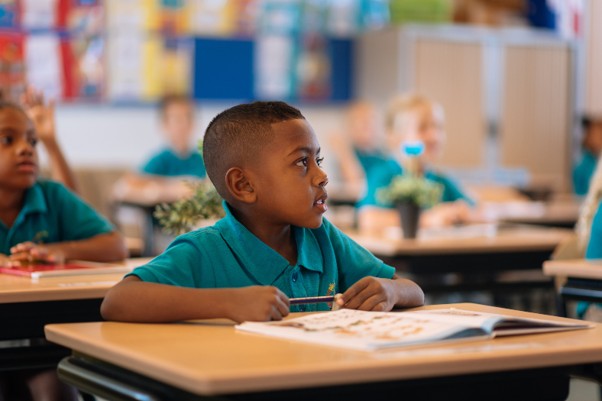
Starting a new school year or entering a classroom environment brings many exciting opportunities for children to learn, grow, and build relationships. Along with academic learning, children are also learning how to function successfully in group settings by following routines, managing emotions, communicating respectfully, and interacting positively with peers and teachers.
Positive classroom behavior expectations help children feel safe, confident, and successful in school environments. When children understand what is expected of them and receive consistent support and guidance, they are better able to participate in learning, build healthy relationships, and develop important life skills.
Teaching classroom behavior is not about expecting perfection from young children—it is about helping them gradually learn responsibility, self-control, empathy, and cooperation in developmentally appropriate ways.
Why Positive Classroom Behavior Matters
Children thrive in environments where expectations are:
- Clear
- Consistent
- Predictable
- Supportive
Positive behavior expectations help create classrooms that feel safe, organized, and emotionally secure for everyone.
When children understand classroom routines and expectations, they are more likely to:
- Feel confident participating
- Build stronger friendships
- Develop independence
- Focus more effectively on learning
- Experience less frustration and anxiety
Classroom behavior skills also support long-term emotional and social development beyond school settings.
Understanding Developmentally Appropriate Behavior
Young children are still learning how to:
- Manage emotions
- Control impulses
- Follow directions
- Wait patiently
- Share and cooperate
Parents and educators need to remember that these skills develop gradually over time.
Children may:
- Forget rules
- Need reminders repeatedly
- Struggle with transitions
- Become emotional or frustrated
These moments are opportunities for teaching and guidance—not punishment or shame.
The Connection Between Emotional Regulation and Behavior
Behavior and emotions are closely connected.
Children who are:
- Tired
- Hungry
- Overstimulated
- Anxious
- Frustrated
may have more difficulty following expectations and managing behavior appropriately.
Helping children learn emotional regulation skills supports positive classroom behavior by teaching them how to:
- Recognize emotions
- Calm themselves
- Communicate feelings appropriately
- Handle frustration constructively
Behavior improves when children feel emotionally supported and secure.
Important Classroom Behavior Skills for Young Children
1. Listening and Following Directions
Listening is one of the foundational classroom skills children develop in early childhood.
Children are learning how to:
- Pay attention to adults
- Process instructions
- Follow multi-step directions
- Respond appropriately
Parents can support listening skills at home through:
- Simple games like “Simon Says”
- Practicing one-step and two-step directions
- Reading books together and discussing them
Praise helps reinforce these skills:
- “You did a great job listening carefully.”
2. Taking Turns and Sharing
Group environments require children to practice patience and cooperation.
Sharing and turn-taking help children:
- Build friendships
- Learn fairness
- Develop empathy
- Practice self-control
Because these skills are challenging for young children, adults should provide:
- Gentle reminders
- Modeling
- Positive reinforcement
Children benefit from practicing these skills regularly during playtime and family activities.
3. Using Respectful Communication
Children are still learning how to communicate respectfully, especially when frustrated or emotional.
Positive communication skills include:
- Using kind words
- Asking for help appropriately
- Speaking calmly
- Listening to others
Adults can model respectful communication by:
- Remaining calm during conflict
- Using polite language consistently
- Encouraging children to express feelings with words
Examples:
- “Can I have a turn when you’re done?”
- “I feel upset because…”
4. Managing Emotions in Healthy Ways
Young children experience big emotions but may not yet know how to manage them appropriately.
Classroom environments require children to:
- Handle disappointment
- Wait patiently
- Cope with frustration
- Recover from mistakes
Parents and teachers can teach calming strategies such as:
- Deep breathing
- Counting slowly
- Taking a quiet break
- Asking for help
Emotional regulation is an essential part of positive behavior development.
5. Respecting Personal Space and Boundaries
Children also learn how to:
- Keep hands and feet to themselves
- Respect others’ belongings
- Understand physical boundaries
These lessons help children develop empathy and social awareness.
Why Consistency Is So Important
Children learn best when expectations remain consistent between home and school.
Consistency helps children:
- Feel secure
- Understand routines more clearly
- Build confidence
- Know what behaviors are expected
When parents and teachers work together, children receive clear and supportive guidance.
How Parents Can Support Positive Classroom Behavior at Home
1. Establish Predictable Routines
Consistent routines help children feel emotionally secure and prepared for school environments.
Helpful routines include:
- Morning schedules
- Bedtime routines
- Mealtime expectations
- Cleanup routines
Children who are familiar with structure often adjust more easily to classroom expectations.
2. Practice Independence
Children feel more confident at school when they can complete simple tasks independently.
Practice:
- Putting on shoes and jackets
- Cleaning up toys
- Carrying backpacks
- Washing hands independently
Independence supports responsibility and confidence.
3. Use Positive Reinforcement
Children respond well to encouragement and recognition.
Instead of focusing only on mistakes, acknowledge positive behaviors:
- “I’m proud of how patiently you waited.”
- “You used such kind words.”
- “You worked hard to calm yourself down.”
Positive reinforcement helps motivate children and build self-esteem.
4. Model the Behavior You Want to See
Children learn by observing adults.
Parents and caregivers can model:
- Respectful communication
- Patience
- Problem-solving
- Emotional regulation
Children are more likely to mirror behaviors they see consistently.
The Importance of Teaching Problem-Solving Skills
Conflict and mistakes are normal parts of childhood.
Rather than immediately solving every problem for children, adults can guide them through problem-solving by asking:
- “What happened?”
- “How do you think your friend feels?”
- “What could we do differently next time?”
These conversations help children develop a sense of responsibility and empathy.
Helping Children Through Difficult Transitions
Transitions are often challenging for young children.
Examples include:
- Moving between activities
- Cleaning up toys
- Arriving at school
- Saying goodbye to parents
Children handle transitions more successfully when adults:
- Give warnings ahead of time
- Maintain routines
- Stay calm and consistent
Simple preparation helps reduce frustration and emotional overwhelm.
Avoiding Shame and Harsh Discipline
Children learn best in supportive environments where mistakes are treated as opportunities for growth.
Avoid:
- Yelling
- Public embarrassment
- Comparing children to others
- Labeling children as “bad” or “difficult”
Instead:
- Focus on teaching
- Remain calm
- Offer guidance and support
Positive discipline helps children feel safe enough to learn and improve.
The Role of Teachers and Caregivers
Teachers and caregivers help reinforce positive behavior by:
- Creating structured environments
- Modeling respectful behavior
- Providing emotional support
- Teaching social skills intentionally
Strong communication between families and educators helps children feel more secure and supported.
Building Long-Term Social and Emotional Skills
Positive classroom behavior expectations are not only about school success—they help children develop important lifelong skills such as:
- Respect
- Empathy
- Self-control
- Communication
- Responsibility
- Cooperation
These skills support healthy relationships and emotional well-being throughout life.
When Behavior Challenges Continue
It is normal for young children to struggle with behavior at times. However, if challenges persist or become severe, parents and educators may benefit from working together to understand the child’s needs better and identify supportive strategies.
Every child develops at their own pace, and patience and consistency are key.
Teaching children positive classroom behavior expectations helps create strong foundations for learning, emotional well-being, and healthy relationships. Young children are still learning how to manage emotions, communicate respectfully, and function successfully in group environments, and they need patient guidance and support along the way.
By modeling respectful behavior, maintaining consistent routines, teaching emotional regulation skills, and focusing on encouragement rather than punishment, parents and educators can help children feel confident, capable, and successful both inside and outside the classroom.
Positive behavior is not about perfection—it is about helping children grow into kind, respectful, resilient, and emotionally healthy individuals.
Looking for a classroom environment that nurtures positive behavior with patience and consistency? At Southwest Academies, our teachers create supportive, structured settings where children learn respect, self-control, and confidence every day. Schedule a tour today to see our approach in action. Contact us today!
Find a Location Near You:
Forest Park Academy